- Behind the Play
- Posts
- BEHIND THE PLAY #80
BEHIND THE PLAY #80
Part one of a conversation with Murray Mollard, author of Winning Pitch - The Canadian Men's Soccer Team at the World Cup and Beyond

Gregor Young
April 27, 2026
Murray and I played together for UBC a long time ago. He was already a massive fan of the game in Canada and the Canadian national teams tehn but he’s now written an excellent book on the men’s national team and the critical juncture that it sits in now having had recent success (qualifying for the 2022 World Cup and making the semi-finals of the 2024 Copa America) and being 54 days from the start of a World Cup on home turf.
Part one of our conversation covers growing up in Canada when info about the game in print and on TV was like being in a treasure hunt, the formative experiences that drew us into the game and maybe the best account, from interviews with the players who were in the squad, of Canada’s 1986 World Cup story.

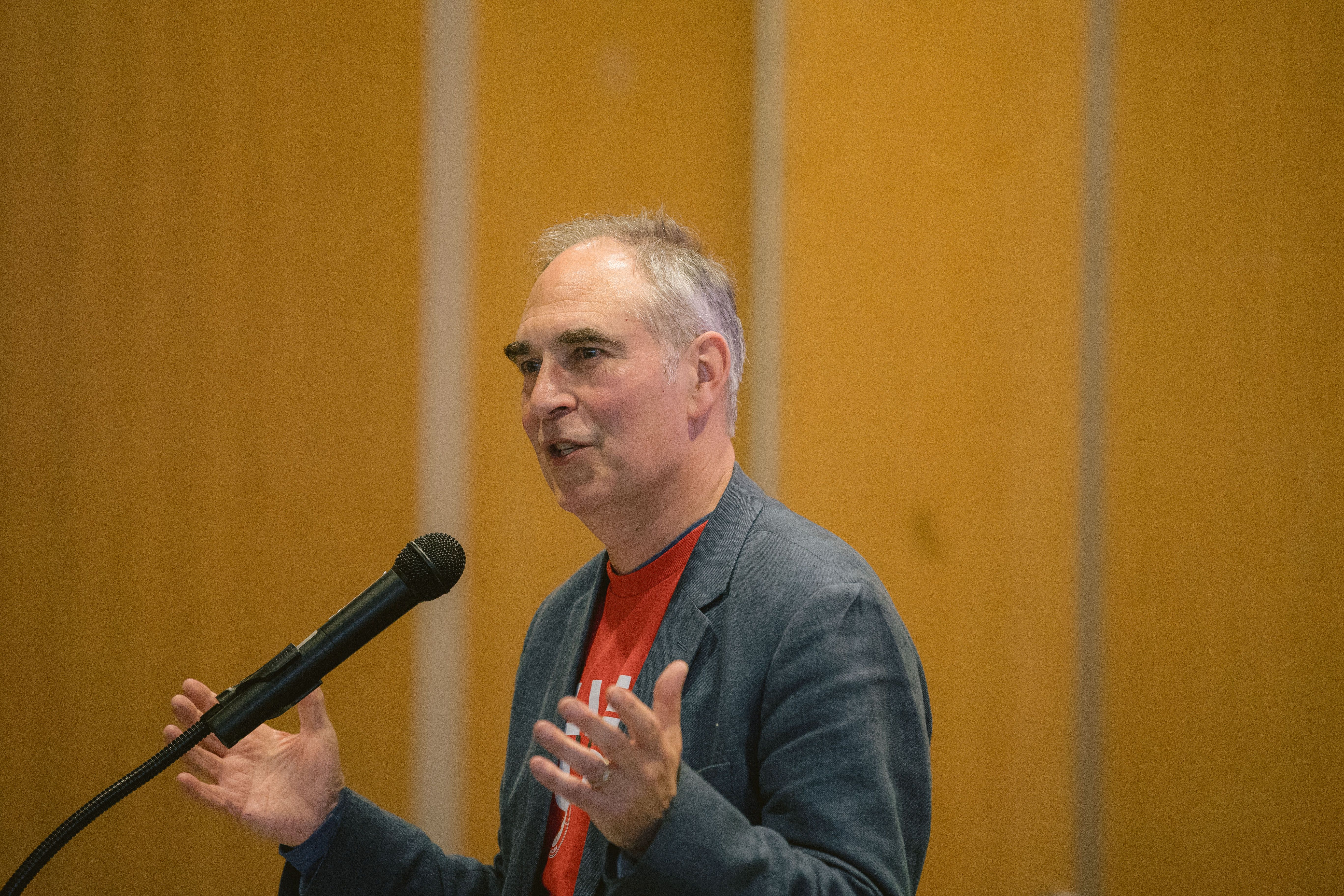
Author Murray Mollard, at the launch party for his book Winning Pitch - The Canadian Men’s Soccer Team at the World Cup and beyond. Photo courtesy of Dream Soda.

Gregor Young: You've written a book about soccer now, and you've obviously read, I would assume, a lot of books about soccer. What are your favourites?
Murray Mollard: Brilliant Orange is a great book. The miracle of Castel di Sangro is also excellent.
GY: Yeah, it's sitting on a coffee table next to me.
MM: I’m just in the process of finishing Simon Cooper's World Cup Fever, which I quite enjoy. Have you heard of that? It's new.
GY: No.
MM: There's a lot of cultural moments, sociological moments, political moments. I think you'd enjoy it.
GY: He did Soccernomics, didn't he?
MM: Yeah.
GY: Yeah, I've read that one. I tend to like ones like Fever Pitch with a personal narrative. The other one that I really like is Pete Davies All Played Out - The Story of the 1990 World Cup, about his experience of being in Italy for that, supporting England, was really good.
MM: I’m looking forward to the book you write!
GY: Someone else asked me that recently, and I said, I struggle to put out a newsletter every two weeks. I'm not sure I can have the discipline to do a book, but who knows.
MM: Yeah, it’s a lot of time and work. My wife recently asked me, “Who are you married to? Me, or soccer?”
GY: I know, it's like that with me and my wife. I mean, she came into our relationship knowing absolutely nothing about soccer and has been dragged along for 34 years now. She’s gone to a Euro in France and saw five games and lots of Whitecaps and even 86ers games when I was playing. Our kids all played all the way through to U18 too, so her life has been peppered with the game.
On that note, one of the things that struck me early on in the book was that we seem to have both been drawn into the game in the same ways. As kids looking, really trying to seek out any sort of info, because there was almost nothing on TV when we were growing up. The highlight of my week was when my dad would come home, and he’d gone to Robson Street, to a European magazine store there, and brought home a Shoot magazine for me. That was a hugely influential part on my soccer education and it sounds like you were the same.
MM: Yeah, let me first just say this. Number one, thank you for reading the book and paying such close attention to it. You know, I'm not sure all the readers of the book will pay such close attention, so I appreciate that. I mean, you write for a reason, and you want to get people thinking and imagining possibilities. I think that's partly why I wrote the book, is to shine a light on some of the parts of the game.
But yeah, going back to those origins, you grew up in Vancouver, right?
GY: Yeah.
MM: Yeah, so, were the Whitecaps not on TV at all when you were young?
GY: My memories of the Whitecaps, when they started, is my dad got season tickets from their first season in ’74 and my memories of the Whitecaps were going to Empire Stadium to see them. I went to almost all those games with him. Sometimes he'd go with a friend, but it seems like I went a lot. When I got a little bit older, I could go with friends and we would take the bus over Second Narrows Bridge. So it's always been in-person memories for me, not on TV. They could have been on TV but I don’t remember.
MM: So, you know you had a bit of an advantage. Number one, you were in Vancouver. Number two, there was an actual professional team here and number three, you had local media reporting pretty regularly on the Whitecaps.
In Calgary soccer was pretty low on the media priority list but yeah, I was just desperate to consume anything Canadian soccer related
I've got all the old Soccer Corner magazines. I wrote about it in the book. It was an American publication that covered the game. It had high production values. Great photos. I sent in a letter to the editor and they printed it. It’s a pretty big thrill to, you know, open up a magazine when you're 13 to read your letter.
GY: I'm a big believer in formative experiences, especially when you're a kid, and sometimes you don't recognize what's been formative until a quarter century later. We both had those experiences in the context of Canadian soccer where we had to sort of seek that stuff out, which makes them resonate more. One of the other things that we both ended up doing that was similar is we both played in the Robbie tournament in Ontario! That was huge at the time, that idea of travel and soccer and playing teams from other provinces and other countries. I remember that had a big influence on me as well. You guys did quite a bit of travel, didn't you? Your team must have been one of the first youth teams to do international travel.
MM: Yeah, it was significant, and it all has to do with leaders, coaches that have that appetite to travel, right? Without that you don't have it, and I wrote a little bit about that. One of my formative experiences, just to go back to that note, was in ’77. I was delivering the Calgary Herald, saving my money and the Vancouver Whitecaps had a residency summer camp. And so I came out to it and got to train twice a day plus in the evenings they were showing soccer films. That was just huge for me as a kid to be able to experience that.
I think I wrote about Bob Bolitho. He was my camp counsellor.
GY: Oh yeah, he burst your ball! You guys had to bring your own ball to the camp and he hit it so hard it burst!
MM: I keep telling Bob (Lenarduzzi) this story, and I figure maybe they'll give me a ball, like, 45 years later. Nope, no ball yet!
The following year in 1980, after the Robbie, I went on this big trip over to Finland and Sweden with a Calgary Blizzard team. That was a memorable trip, mainly because we beat the Scottish team from East Kilbride. They were a good team, and, you know, they kind of played us off the pitch, I think, but we ended up winning 3-1. But the most memorable part was the pitch was ringed with Scotsmen, right? And the fact that a bunch of Calgary hicks with cowboy hats and orange and black uniforms showed up and won the game was, I think, too much for most of them. So they were spitting and swearing at us pretty much throughout the match, as were the players.
GY: We never did international trips in youth soccer but I was lucky enough to travel a lot with UBC Soccer. That was, again, hugely formative for me, and I carried that over to coaching my daughter's team. We did a tournament in Denmark, and then 2 years later, a tournament in Spain, which were just fantastic. We had a great parent group, great group of kids and hopefully that led to great memories for those players.
You said earlier, yeah, you needed the time to do it, and from reading it, two things struck me. The depth of research and the access that you managed to get with players. I've never read as good an account from people who were actually there at the 1986 World Cup as what you got. That must have been very time-consuming to arrange and get agreements from those people. I'm guessing that must have been one of the more fun parts too.
MM: Yeah, the tail end of that team, the youngest players, were my cohort. I played against Colin Miller in some high school matches. Randy Samuels was my teammate in Richmond when I first landed in Vancouver. Greg Ion, I remember playing in a Vancouver Sun Provincial Cup semi-final. My coach came up to me and said, your job is to mark Greg Ion out of the game. I'm not sure I did that, but that was my task. We lost that Sun semi-Cup final against Cliff Avenue United on, get this, corner kicks.
GY: I remember that! Corner kick totals as a tiebreaker!
MM: So it was a great thrill to see them go to the World Cup, right? It was an amazing tournament for Randy.
GY: That was the greatest era of Vancouver soccer, really, wasn't it?
MM: Yep. That was the apex, right? I wanted to tell that story in, I think, as much depth as possible, and that hadn't been written before. I had access to, and had some relationships with some of the top players there, like Lenarduzzi. And once you get an introduction from one of those leaders that opens some doors to others. I interviewed probably about 16 of those players out of the 22-man squad. It takes a lot of work to secure interviews. You have to be incredibly persistent. You have to leave no stone unturned. The guy who I didn't get was Randy Ragan. I tried really hard to locate him. I think he was coaching at Guelph at one point so I tried that route. Anyway, some people don't necessarily want to be found, right?
But some of the players, like Mike Sweeney, were incredibly generous. Ian Bridge, I loved that interview, and I think I start out the chapter well with him telling me the story about getting an injury and taking himself out of the game against Honduras in St. John's. I actually think the 1986 chapter would be a great little 3-part TV mini-series.
Those players' stories, I think, are quite compelling.
MM: Greg Ion wouldn't give me an interview, wouldn't go on the record, but I did have a chat with him. It was a difficult thing for him and the three others that were named to the team but did not get to go to Mexico.
GY: Yeah, that's right, you brought that up a couple times about the four players who were reserves that Tony Waiters opted to leave in Canada and not bring to Mexico. It is hard to understand when you have the ability to take 22.
MM: Well, it's just an investment in the future, right? You want these players to be exposed to that environment, and learn from it, and be ready for the next World Cup, right? Or even just the next qualifying phase.
Pasquale De Luca told a difficult story about being left behind, and then being called back into the team, and then being told that he would start to… somehow he didn't even make the bench in the final match. So he had a real rollercoaster of difficult emotional experience as well. Yeah, there was lots of little dramas. Take Branco Segota for example. He was arguably Canada’s most talented player with goal scoring prowess. He was a big goal scorer in NASL but Tony didn't select him. He always wondered what was going on there.
MM: And then the whole goalkeeper saga/drama between (Paul) Dolan and (Tino) Lettieri. I got some of the backstory. I don't think I broke the story about some of them but I think I told that story in more detail than anyone else has.
GY: It was new to me.
MM: There was also some tensions around the fact that we had two amateurs on the team, right? Jamie Lowery and George Pakos. Both, by the way, are going to come to my book event in Victoria on May 3rd. That will be a lot of fun.
I think there was a lot of really interesting stories in that 86 World Cup team. You know, I didn't tell much of the story of the 2022 World Cup team, and the reason is we're too close to it and many of those players are still playing and they wouldn't be so forthright.
The Sven Haberman story's crazy, right?
GY: It is. He's got a thousand stories, and they're all funny.
MM: I spoke to Doneil Henry about the Qatar World Cup. He mentioned that there was a lot of talk once they qualified about how it was going to be a ticket to a big club in Europe, and so there was a shift from playing for each other to what you gain personally from the participation in the World Cup, which I thought was an interesting observation.
GY: It's just sort of the real politik element of the game, isn't it? Players who are not already at a top club making top dollar will see the World Cup as a massive leverage opportunity for them to be able to boost their career. So many players have been able to do that. James Rodriguez in 2014 stands out as an example. Had a decent career going but won the golden boot and was then playing for Real Madrid the next season.
MM: I’m going to take that point and jump to our youth development, because that was a big point I wanted to underline in the book. The fact that being exposed in a World Cup, getting that exposure, makes a big difference to their careers not just for established players but for the young players being in a youth World Cup. It makes a big difference for them also being introduced to other professional clubs around the world.
We are missing that opportunity in a big way. On page 184 and 185, I go through the facts about Canada's U20 men's team and the U17 men's team. About how we haven't qualified for a U20 World Cup since 2007 when we qualified because we were a host nation.Then at the U17 World Cup we finally won a game last year, beating Uganda. We had a great result against France, 0-0 but lost to Chile. We ended up going out to Ireland on penalties. You no doubt followed the U17 qualifications, CONCACAF qualifications in February.
GY: We didn't qualify.
MM: We lost to Jamaica, right? Haiti and Cuba qualified.
GY: One of our staff coaches was the strength and conditioning coach on that trip. I was talking to him about it recently.
MM: Oh.
GY: They were in a state of shock that they didn't qualify. Crushed.
MM: But the implications of that mean that those U17 players. They’re not nearly as likely to get scouted by clubs overseas, which may limit their potential for growth, right? And that makes a difference for those players. I know on a personal level, it made a big difference for me to move from Calgary to Vancouver to play against players in Vancouver. Players in Vancouver were better than players in Calgary. It helped my game.
GY: Yeah, more players, more levels, more opportunities, and let's face it, like we were saying earlier, Vancouver was the hotbed of Canadian soccer at that time. Not anymore.
MM: Totally. I think two-thirds of the World Cup team were either native BCers, or were playing professionally in British Columbia. And now look at the stats. Who do we have? We have Sigur and Waterman.
GY: Yeah. Sort of on that note, since we're talking about development. You touched on the Canadian Championship and the importance of it and adding more teams to it is something that I've sort of been banging a drum on for some time.
MM: Yeah.
GY: Opening up that cup, so it brings more opportunities, and more attention to it, and more narratives, and more giant killing stories. It's an interesting competition to me, and they did expand it down to League 1 but I'd like to see it expanded more. I think that also pulls players up who get seen. I’d like to see a plan to get champions from leagues like VMSL and U-Sports entered. That updraft will bring the odd player every now and then into a professional environment.
MM: I think the point you're making is that… well, the point I make in the book is that, look, when it comes to high-level professional soccer in Canada, we have effectively 11 teams and only 3 of them probably have true, youth academies so we're a far ways from being a football nation when it comes to the sort of league infrastructure needed. There's a long ways to go.
But yeah, just on the infrastructure point, because I have a chapter, as you know, on that, called “Bricks and mortar media and money.”
I had a chance to go to Eindhoven and spend time at PSV Eindhoven and just see what the setup is. Anyone who has those opportunities will have their eyes opened about how far we are from actually having the foundational piece that we need in place to actually sustain excellence in our highest professional teams and also the national teams.
But going back to those visits overseas we talked about. You see not only the sort of football infrastructure, but you see the social… the degree of social infrastructure that's there. Every club has a social clubhouse where everybody hangs out.
GY: That was a great point in that book, yeah.
MM: When you have the older players with the younger players, you're learning from each other, you're interacting. You don't just come to the field, hang out, go the game, go home. You really have a lot of socializing as well.
GY: I mentioned I took my daughter's team to a tournament in Spain in 2011. We were in San Sebastian and we played at probably 4 different locations and each of them was like a neighbourhood club but the setup at those fields was beyond anything that exists here. A proper concession stand, dressing rooms, club kit for sale. It was totally a little social hub.
MM: Right. Edmonton Scottish, have you ever been there? They have a nice club setup too.
GY: In the dome? I’ve been there.
MM: Yeah, the dome and some outdoor fields have that sort of feel.
Part two of the conversation in the next BTP will be out later this week. In that part, Murray talks about some great ideas that CPL coaches have put in place for coach education. I’ve told him I’ll be taking those ideas and using them at our club.
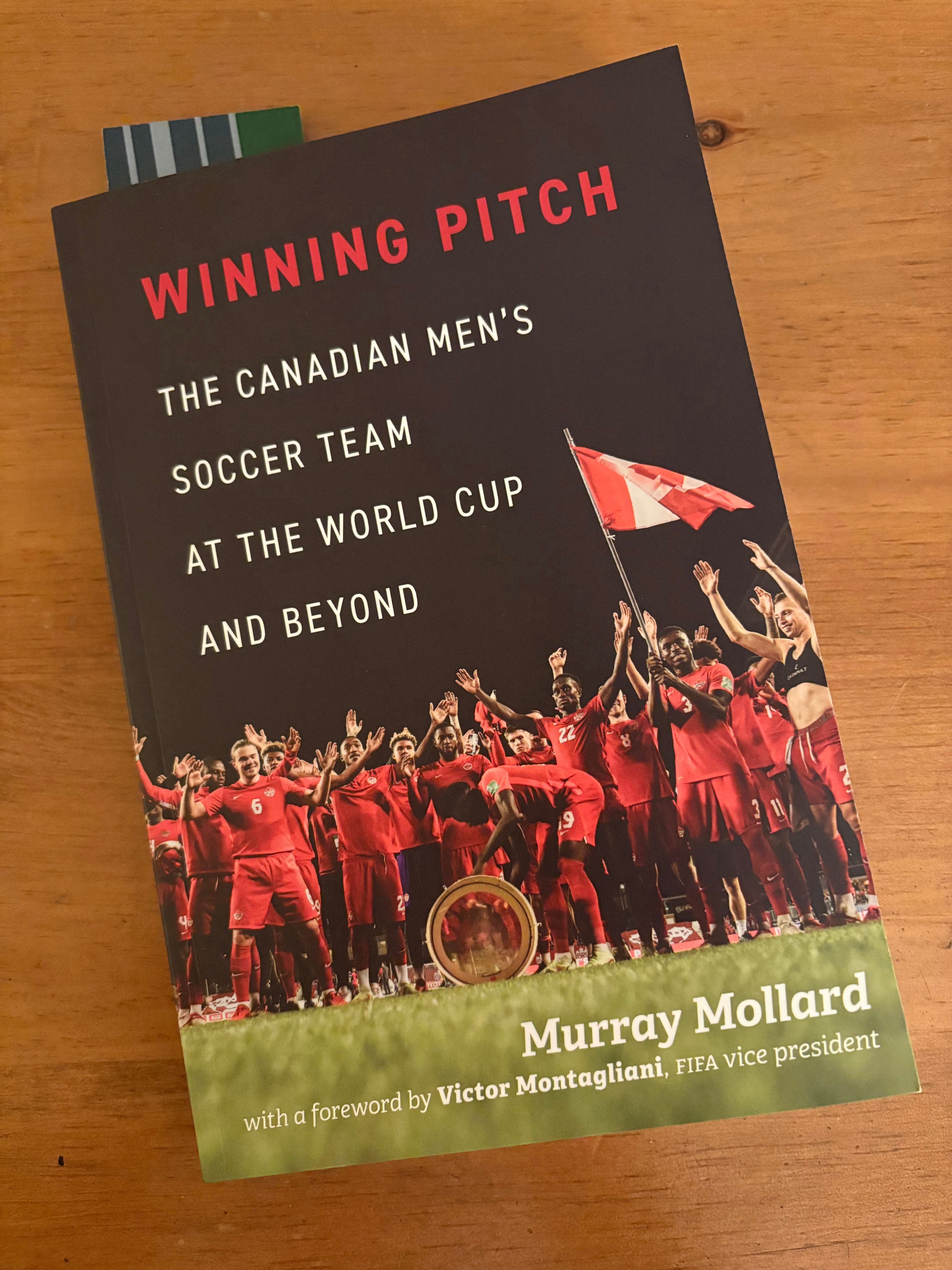
This is an excellent read of anyone interested in the roots of the story of our men’s national team at the 1986 World and how it’s got to where we are now. Fascinating interviews with former players, current players and current coaches. You can support Canadian authors and Canadian publishers by purchasing the book at the link below.
Reply